Green Aviation Initiatives
Green Aviation Initiatives: The Quiet Revolution Taking Flight
Aviation has always symbolised possibility, the ability to cross oceans, connect cultures, and shrink the world. But today, the industry stands at a crossroads. The same planes that bring people together also contribute significantly to global emissions. And now, a new movement is rising: green aviation initiatives, a collective push to reinvent how the world flies.
This isn’t just about cleaner engines or futuristic fuels. It’s about reimagining aviation from the ground up, engineering, operations, energy, and even mindset. The future of flight is being rewritten, and the world is watching.
The Turning Point: Why Aviation Must Change
For decades, aviation was seen as untouchable, too complex, too regulated, too essential to overhaul. But climate realities have forced a shift.
- Travellers are demanding cleaner options
- Governments are tightening environmental policies
- Airlines are facing pressure to reduce emissions
- Innovators are pushing boundaries with new technologies
The industry is discovering something powerful: Sustainability isn’t a burden. It’s an opportunity.
Sustainable Aviation Fuel (SAF): The First Big Leap
SAF is one of the most promising green aviation solutions. Made from renewable sources like agricultural waste, used cooking oil, and even algae, SAF can reduce lifecycle emissions dramatically.
Why SAF Matters
- It works with existing aircraft
- It reduces reliance on fossil fuels
- It can be scaled globally
- It offers immediate emission reductions
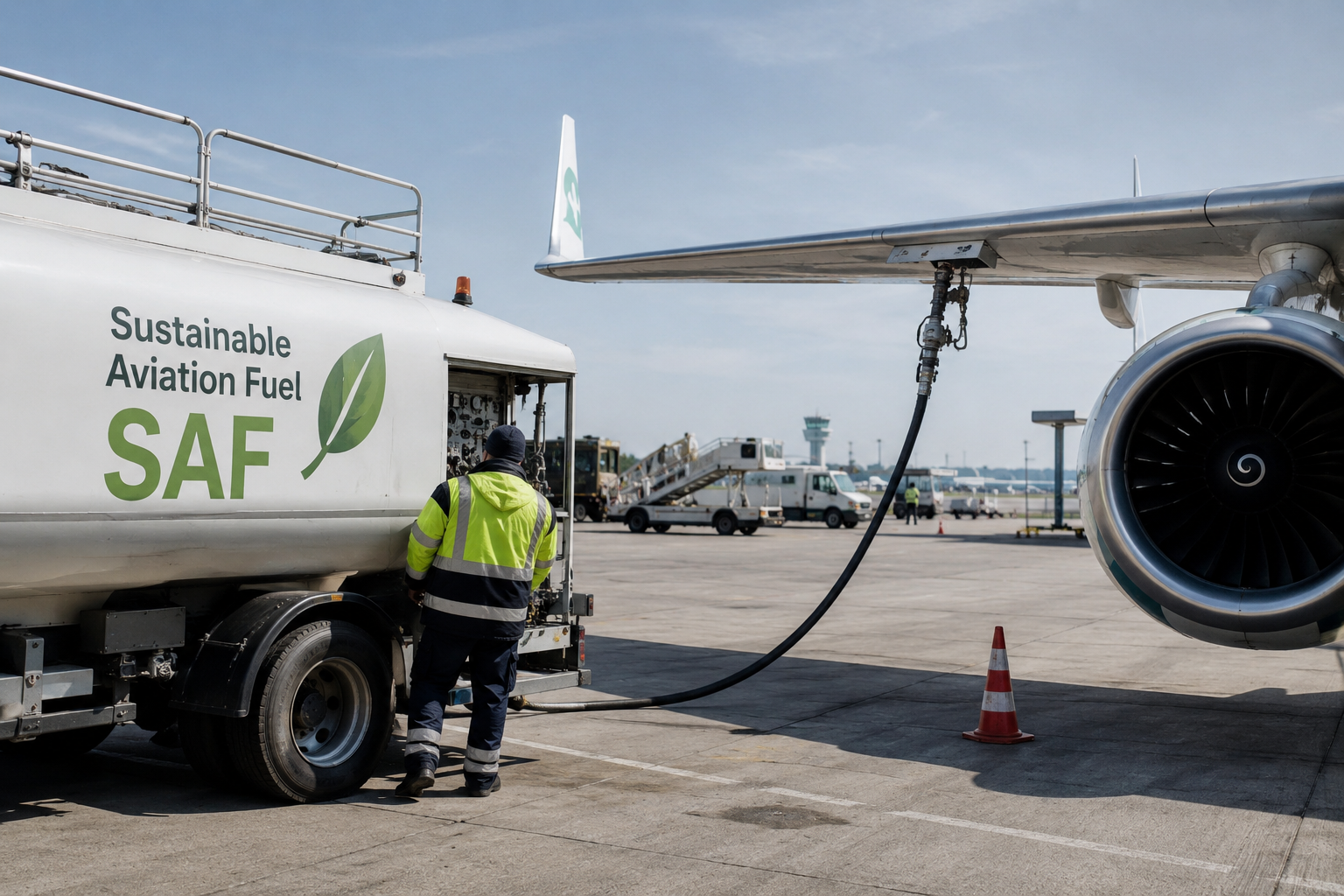
SAF isn’t a distant dream, it’s already being blended into commercial flights. The challenge now is scaling production so it becomes the norm, not the exception.
Electric and Hybrid Aircraft: The Next Generation of Flight
Electric aviation is no longer science fiction. Small electric aircraft are already flying short routes, proving that clean energy can lift more than cars.
Electric Flight Advantages
- Zero in-flight emissions
- Lower noise pollution
- Reduced operating costs
- Ideal for regional travel
Hybrid aircraft combining electric motors with traditional engines are emerging as a bridge between today’s reality and tomorrow’s fully electric skies.
The dream is bold: A world where short-haul flights produce no emissions at all.
Hydrogen-Powered Aircraft: The Long-Term Vision
Hydrogen is one of the most exciting frontiers in aviation. When used in fuel cells, hydrogen produces only water vapour, making it a near-perfect clean energy source.
Hydrogen’s Potential
- High energy density
- Zero carbon emissions
- Suitable for larger aircraft
- Long-term scalability
The challenge lies in infrastructure, storage, and safety. But the momentum is undeniable. Hydrogen could become the backbone of long-haul green aviation.
Smarter Flight Operations: Efficiency as a Climate Tool
Not all green aviation innovations come from new fuels or futuristic aircraft. Some come from smarter operations.
Operational Improvements Include
- Optimised flight paths
- Reduced taxiing time
- Lightweight materials
- Improved aerodynamics
- AI-driven route planning

These changes may seem small, but together they reduce millions of tonnes of emissions every year. Efficiency is becoming a climate strategy.
Green Airports: Sustainability on the Ground
Aviation isn’t just about what happens in the sky. Airports are transforming too.
Green Airport Innovations
- Solar-powered terminals
- Electric ground vehicles
- Rainwater harvesting
- Smart lighting systems
- Waste-to-energy facilities
Airports are becoming ecosystems of sustainability, proving that green aviation begins long before takeoff.
The Economic Debate: Can Green Aviation Be Affordable?
This is where the conversation gets interesting.
The Concerns
- SAF is more expensive than traditional fuel
- Electric aircraft require new infrastructure
- Hydrogen technology is still emerging
- Airlines fear passing costs to travellers
The Counterargument
- Innovation reduces cost over time
- Green aviation creates new industries
- Governments offer incentives
- Travellers increasingly value sustainability
The truth is simple: Green aviation isn’t expensive, pollution is.
The Global Divide: Different Regions, Different Speeds
Green aviation adoption varies across the world.
Europe
Aggressive climate policies and strong investment in SAF.
North America
Rapid innovation in electric and hybrid aircraft.
Asia-Pacific
Massive demand driving large-scale sustainability projects.
Africa & Middle East
Emerging markets exploring solar-powered airports and efficient operations.
Latin America
Growing interest in SAF and regional electric aviation.
Each region is contributing to the global movement in its own way.
What This Means for Travellers
The future of flying will feel different and better.
Travellers can expect:
- Cleaner flights
- Quieter aircraft
- More efficient routes
- Transparent sustainability metrics
- New eco-friendly travel options
Flying will become not just a way to explore the world, but a way to protect it.
What This Means for Innovators and Founders
Green aviation is one of the biggest innovation opportunities of our time.
Opportunities Include
- New fuel technologies
- Electric aircraft manufacturing
- Hydrogen infrastructure
- Smart airport systems
- AI-driven efficiency tools
- Carbon tracking platforms
Founders who step into this space aren’t just building companies, they’re shaping the future of global mobility.
Final Thought: The Sky Is Changing, and So Is Our Responsibility
Green aviation initiatives are more than technological upgrades. They’re a declaration that the world can fly without harming the planet. They’re proof that innovation and sustainability can coexist. They’re a reminder that progress doesn’t mean choosing between convenience and conscience.
The future of aviation is not just about reaching new destinations. It’s about reaching them responsibly, beautifully, and sustainably.
The sky is still the limit, but now, it’s also the inspiration.