Global Expansion of Music Platforms
How Streaming Is Rewriting the World’s Soundtrack
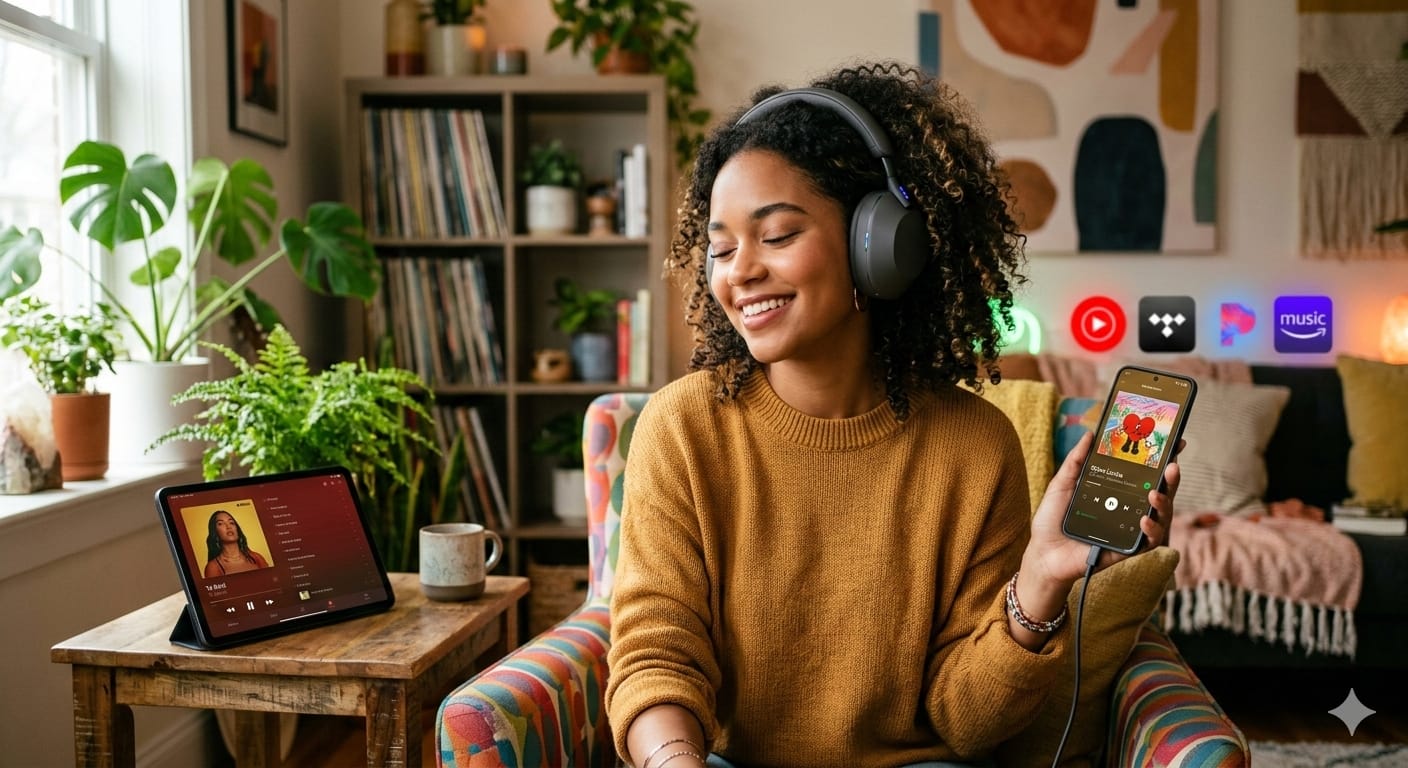
Music has always travelled,across borders, cultures, and generations. But today, its journey is faster, louder, and more global than ever. Streaming platforms have transformed music from a local experience into a worldwide phenomenon, connecting artists and listeners in ways that were unimaginable just a decade ago.
We’re living in a moment where technology is not just distributing music ,it’s democratizing it. Whether you’re a music lover discovering new sounds or a tech founder building the next global platform, the expansion of digital music ecosystems is reshaping how the world listens.
A New Listening Culture: Borderless, Personal, and Always On
The modern listener doesn’t wait for the radio. They don’t rely on CDs. They don’t even think in genres anymore. Today’s listener wants instant access, personalized playlists, and global discovery.
Visit Spotify https://www.spotify.com Spotify’s algorithmic playlists like Discover Weekly and Release Radar have become cultural staples. They don’t just recommend songs, they introduce listeners to entire worlds of music, often from countries they’ve never visited.
Apple Music blends human curation with machine intelligence, offering playlists crafted by editors who understand cultural nuance. It’s not just streaming, it’s storytelling through sound.
YouTube Music leverages the world’s largest video library to help listeners explore live performances, remixes, covers, and global hits in one ecosystem.
The result? Music is no longer local. It’s universal.
Case Study: Afrobeats, A Global Genre Powered by Platforms
Afrobeats didn’t become global by accident. Streaming platforms played a massive role in amplifying African artists to international audiences.
Boomplay and Audiomack invested early in African markets, giving artists tools to upload, distribute, and monetize their music. Their localized strategies, offline downloads, lightweight apps, regional charts, helped millions access music despite infrastructure challenges.
Then global platforms stepped in.
Spotify launched Spotify Africa, Apple Music created Africa Rising, and YouTube Music amplified African creators through Foundry.
The result? Artists like Burna Boy, Tems, Rema, and Ayra Starr became global stars.
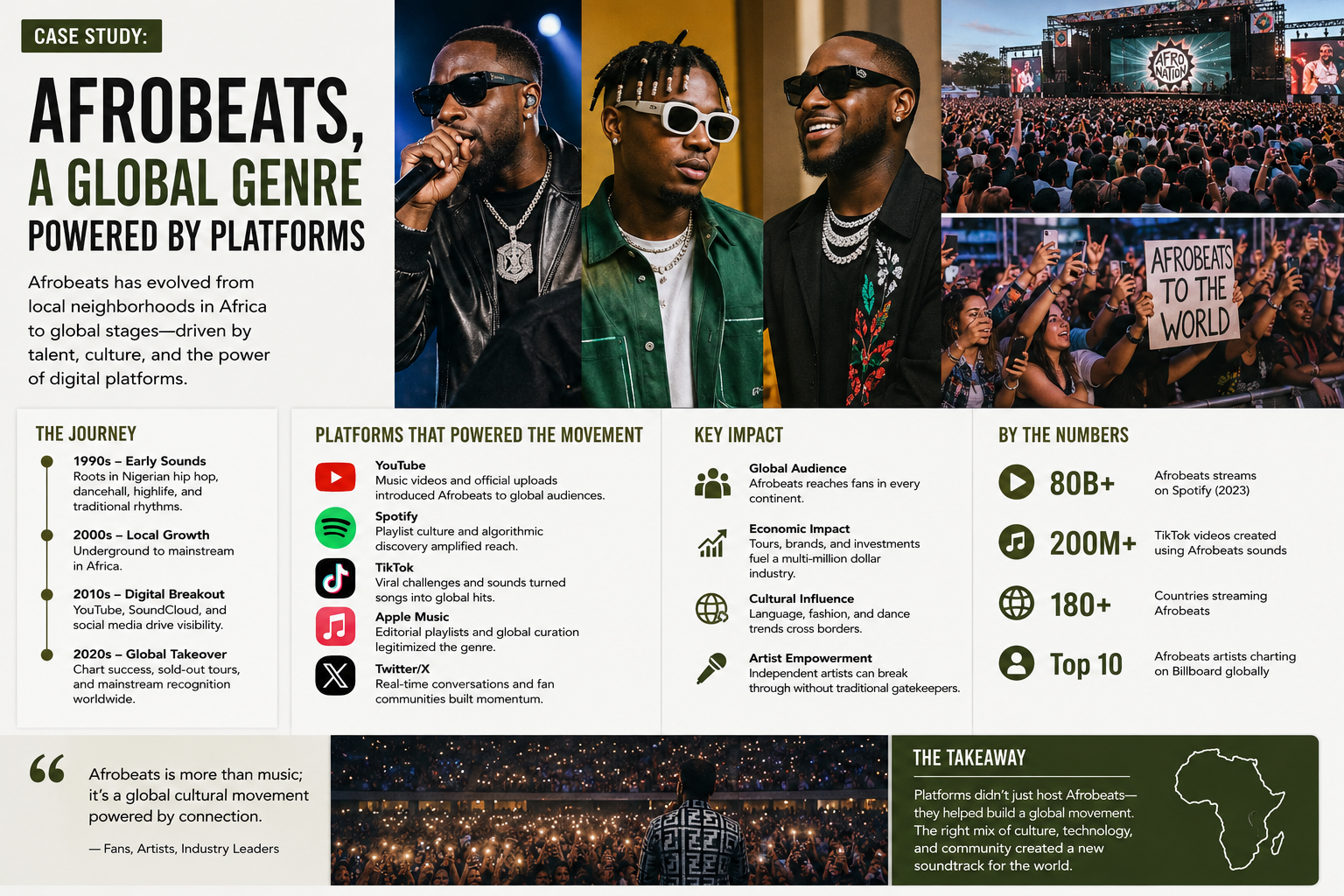
This proves a powerful truth: When platforms expand globally, cultures expand with them.
Technologies Driving the Global Music Boom
The expansion of music platforms isn’t just about geography, it’s about innovation.
1. AI‑Powered Discovery
Pandora’s Music Genome Project pioneered algorithmic discovery, analyzing thousands of musical attributes to match listeners with songs they’ll love.
Today, AI helps platforms:
- Predict listening habits
- Curate mood‑based playlists
- Surface emerging artists
- Translate cultural trends into recommendations
AI is turning music discovery into a deeply personal experience.
2. Cloud Streaming Infrastructure
Cloud infrastructure allows platforms to deliver high‑quality audio instantly, anywhere in the world. It powers:
- Lossless audio
- Real‑time syncing
- Multi‑device streaming
- Global content distribution
Cloud technology ensures that music feels immediate.
3. Localization Algorithms
Deezer’s localization strategy tailors playlists to regional tastes, ensuring that listeners in Brazil, France, Nigeria, or India hear music that reflects their culture.
Localization is the secret weapon of global expansion.
4. Social Music Integration
TikTok isn’t just a social platform, it’s a music discovery engine. Songs go viral overnight, crossing borders faster than traditional marketing ever could.
Social platforms have become global amplifiers.
Case Study: K‑Pop, A Digital Movement Fueled by Streaming
K‑Pop’s global rise is one of the most powerful examples of digital expansion.
Korean platforms like Melon and V LIVE built massive fan ecosystems, enabling fans to stream music, watch behind‑the‑scenes content, and engage directly with artists.
Then global platforms amplified the movement:
- Spotify launched K‑Pop Hub
- YouTube Music promoted K‑Pop playlists
- TikTok fueled dance challenges that went viral worldwide
Today, BTS, Blackpink, Stray Kids, and NewJeans dominate global charts.
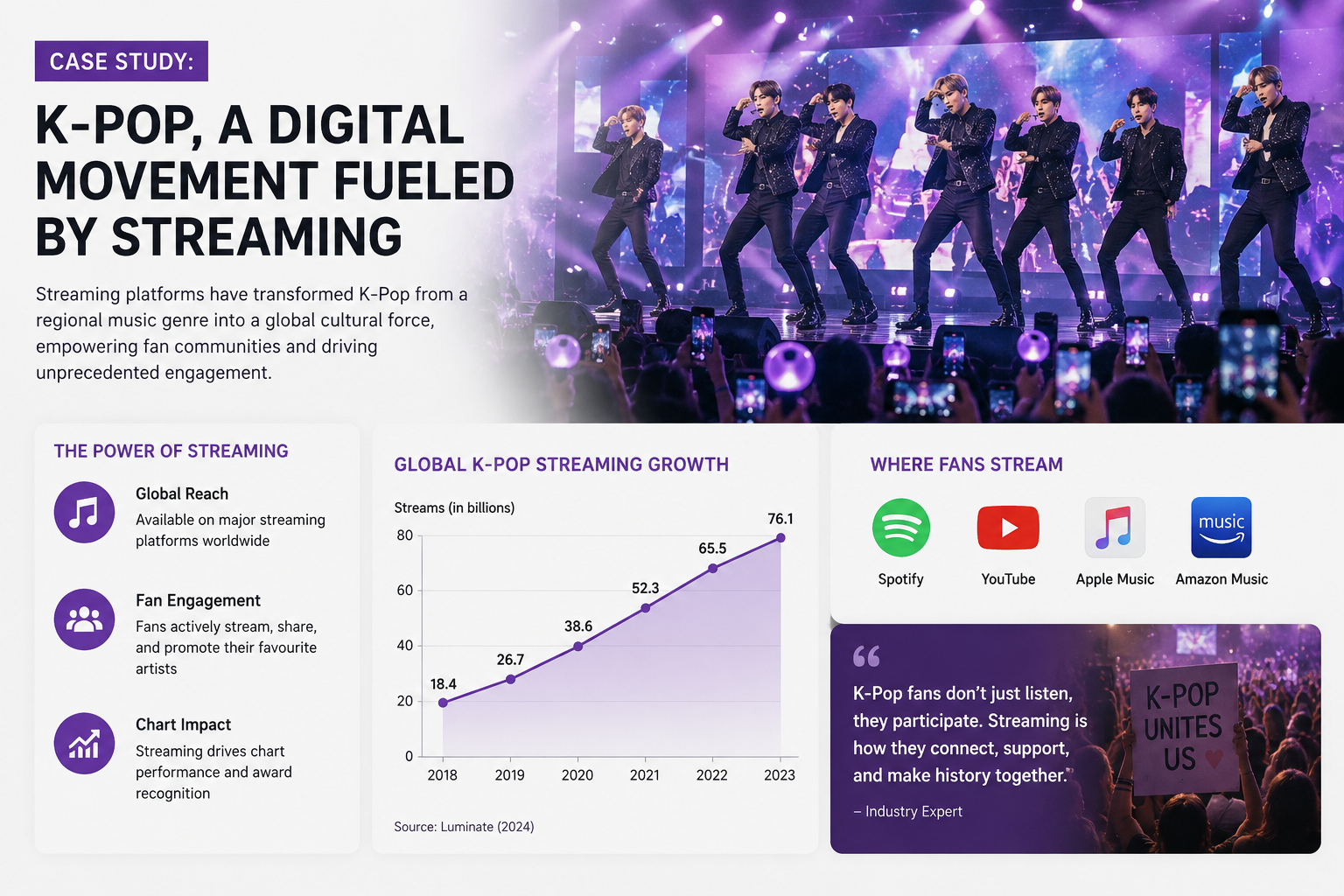
K‑Pop’s success shows that global expansion is not just about distribution, it’s about community.
The New Music Economy: Global, Digital, and Creator‑Driven
Streaming platforms have rewritten the business of music.
SoundCloud empowered independent artists to upload music without labels. It created a new generation of stars, from Chance the Rapper to Post Malone.
Bandcamp built a creator‑first marketplace where artists keep a large share of revenue. It’s proof that global expansion can be ethical and artist‑centric.
Tidal introduced high‑fidelity audio and artist‑friendly royalties, pushing the industry toward better quality and fairer compensation.
The new music economy is built on:
- Global reach
- Direct artist monetization
- Transparent royalties
- Community‑driven growth
Streaming isn’t just distributing music, it’s redistributing power.
What This Means for Listeners
You’re entering a world where:
- You can discover music from any culture instantly
- Your playlists adapt to your mood and habits
- You can follow artists globally, not just locally
- You can access concerts, live sessions, and exclusive content from anywhere
Music is becoming more personal, more global, and more immersive.
What This Means for Tech Founders
If you’re building in music tech, you’re not just creating a platform, you’re shaping global culture.
Here are the biggest opportunities:
1. Build for cross‑border discovery
Global audiences want global sounds.
2. Invest in creator‑first tools
Artists need better monetization and analytics.
3. Leverage AI for cultural intelligence
AI can decode listening patterns across regions.
4. Integrate social experiences
Music spreads through communities, not algorithms alone.
5. Localize deeply, not broadly
Regional relevance drives global adoption.
The future of music belongs to founders who understand culture, technology, and community.
The Future: A Planet Connected by Sound
Imagine a world where:
- Your playlists update based on global trends
- You attend virtual concerts with fans from 50 countries
- AI helps you discover artists before they go mainstream
- Music platforms translate lyrics in real time
- Every culture has equal access to global audiences
This future isn’t far away. It’s already unfolding.
Music platforms are building a world where sound travels freely, without borders, without barriers, without limits.
A Final Word: Music Is Universal. Technology Makes It Unstoppable.
At its core, music is a connection, to emotion, to culture, to people. Technology should amplify that connection, not complicate it.
For listeners, this is your moment to explore the world through sound. For founders, this is your moment to build platforms that unite the world.
The global expansion of music platforms isn’t just a trend. It’s a cultural revolution.