Tech in Beauty Retail
Tech in Beauty Retail: The New Era of Intelligent Beauty
Beauty has always been a story of transformation, a swipe of lipstick that shifts your mood, a skincare routine that becomes a ritual, a fragrance that feels like a memory. But today, the most profound transformations aren’t happening on our faces. They’re happening behind the scenes, inside algorithms, sensors, and digital experiences that are quietly reshaping how we discover, choose, and connect with beauty.
We’re entering a new era where technology doesn’t just support beauty retail, it elevates it. It makes beauty more personal, more inclusive, more intuitive. And whether you’re a beauty lover exploring what’s next or a tech founder building the future, this intersection of beauty and innovation is where the next decade will be defined.
The Modern Beauty Consumer: Connected, Confident, and Curious
Today’s beauty consumer is digitally native, research‑driven, and values‑led. They want products that match their skin tone, their lifestyle, and their ethics. They want transparency, personalization, and convenience, and they expect brands to deliver all three seamlessly.
Technology is the bridge.
Their Virtual Artist tool uses augmented reality to let customers try on thousands of products instantly. Lipsticks, foundations, eyeshadows , all rendered in real time. It’s not just a fun feature; it’s a confidence booster. When consumers can see a shade on their own face, they buy boldly and return less.
MAC uses AI-powered shade matching to help customers find their perfect foundation. No more guessing. No more fluorescent‑lighting disasters. Just precision.
These tools don’t replace the artistry of beauty, they amplify it.
Case Study: Fenty Beauty, Inclusion Meets Innovation
When Fenty Beauty launched with 40 foundation shades, it didn’t just disrupt the industry, it set a new global standard. But behind the scenes, technology played a crucial role.
Fenty used data analytics to identify underserved skin tones and regions. They tapped into digital communities to amplify authentic voices. Their online shade‑matching tools helped millions of consumers find their perfect match instantly.
The result was more than a product launch. It was a cultural shift.
For tech founders, Fenty’s story is a powerful reminder: Innovation becomes unstoppable when it solves a human problem. In this case, the problem was exclusion. Technology made inclusion scalable.
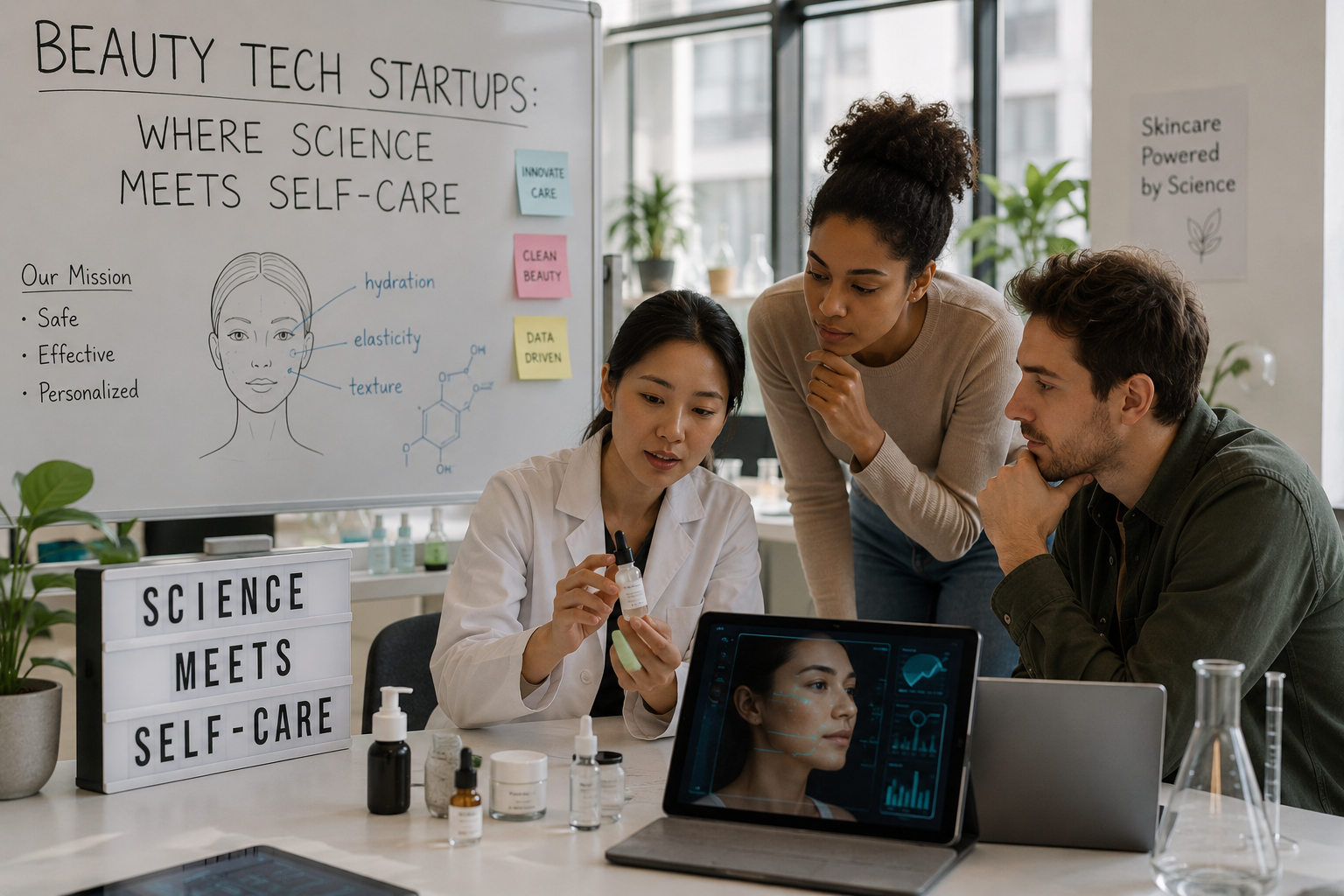
Beauty Tech Startups: Where Science Meets Self‑Care
The beauty tech space is exploding with startups that feel like they’re building the future.
AI Skin Diagnostics
These brands use AI to analyze selfies and create personalized skincare routines. Their tools evaluate pores, pigmentation, wrinkles, and texture with dermatologist‑level precision.
For consumers, it’s like having a skin expert available 24/7. For founders, it’s proof that personalization is no longer optional, it’s essential.
Smart Devices & IoT Beauty
Foreo turned cleansing devices into intelligent skincare companions. Dyson reinvented haircare with engineering-driven tools that use airflow instead of extreme heat.
These aren’t just gadgets. They’re experiences , and they build loyalty because they deliver results that feel futuristic yet accessible.
Virtual Stores & Metaverse Beauty
Charlotte Tilbury launched a virtual store where shoppers can explore products guided by a digital avatar of Charlotte herself. It’s immersive, playful, and surprisingly intimate.
This is the future of beauty retail: not just e‑commerce, but experiential commerce.
Case Study: L’Oréal, Becoming a Beauty Tech Powerhouse
L’Oréal has boldly declared itself a “beauty tech company,” and they’ve backed that claim with action.
They acquired ModiFace, the AR company behind many virtual try‑on tools. They use machine learning to forecast trends, optimize inventory, and personalize marketing. They’ve built internal innovation labs that blend science, creativity, and empathy.
Their transformation shows what’s possible when a legacy brand embraces technology not as a side project, but as a core identity.
For founders, L’Oréal’s journey is a masterclass in long‑term innovation.
The In‑Store Revolution: Physical Retail Gets Smarter
Physical beauty retail isn’t fading, it’s evolving.
Stores are becoming more interactive, more connected, and more human.
- Selfridges uses smart mirrors and digital screens to help shoppers explore products.
- Ulta integrates digital profiles so customers can track purchases, get personalized recommendations, and book services effortlessly.
- Sephora’s Color iQ scans skin to recommend foundation shades with scientific accuracy.
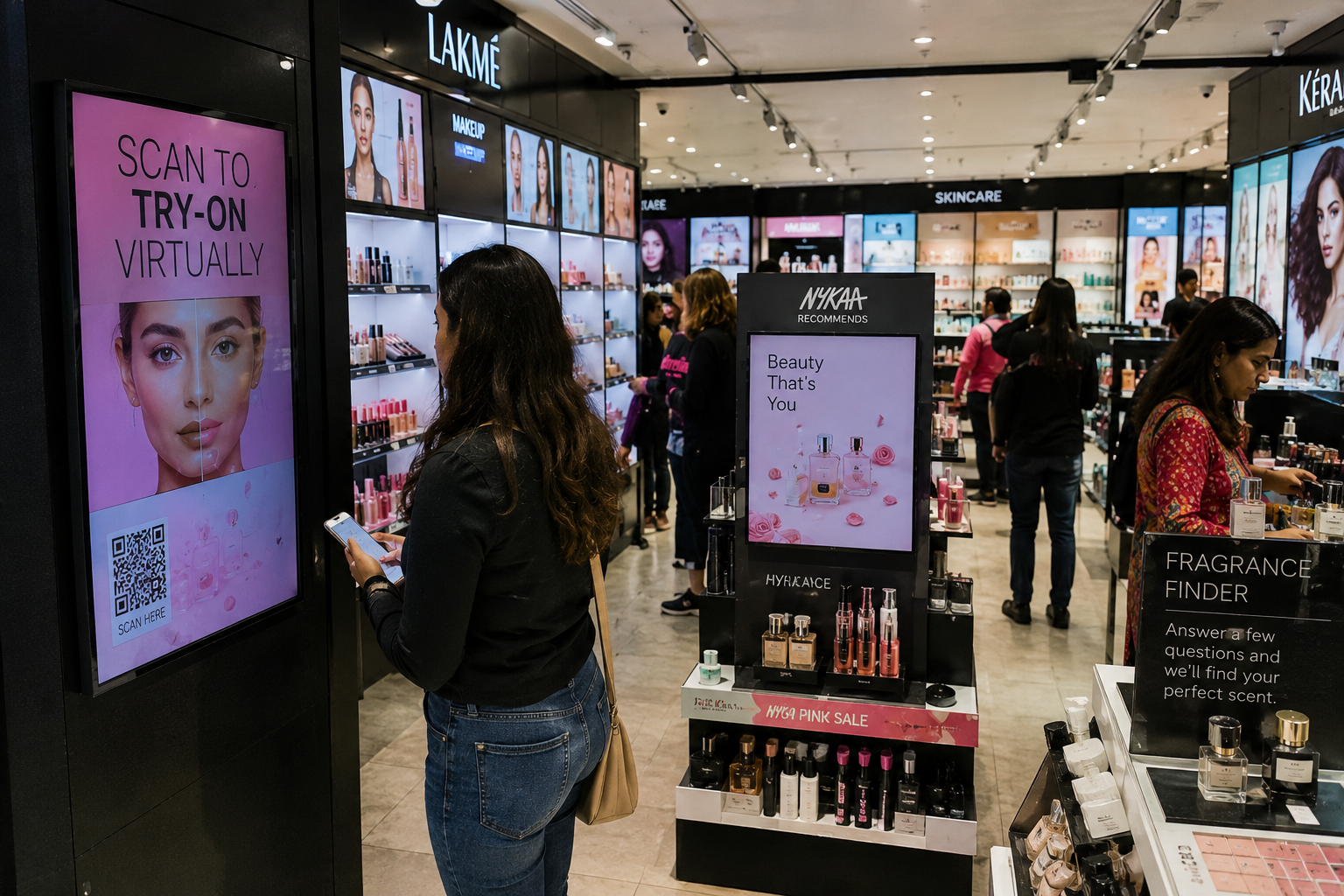
These tools don’t replace beauty advisors. They empower them. Technology handles the data; humans deliver the connection.
The Invisible Tech: Sustainability, Supply Chains, and Trust
Some of the most impactful beauty innovations happen behind the scenes.
Sustainable Packaging & Materials
These brands use digital tools to track sustainability metrics and reduce waste.
Blockchain Transparency
Aveda is exploring blockchain to verify ingredient sourcing. Imagine scanning a product and seeing exactly where each ingredient came from.
Predictive Inventory
AI helps retailers reduce overstocking and understocking, a win for both sustainability and profitability.
This is beauty tech at its most meaningful: solving problems that matter.
What This Means for Beauty Consumers
You’re entering a world where:
- Your foundation matches perfectly every time
- Your skincare routine is built for your unique skin
- Your shopping experience feels intuitive, personal, and fun
- Your values, sustainability, inclusivity, transparency, are reflected in the brands you choose
Tech isn’t replacing the joy of beauty. It’s enhancing it.
What This Means for Tech Founders
If you’re building in beauty tech, you’re not just creating tools, you’re shaping identity, confidence, and culture.
Here are the biggest opportunities:
1. Personalization at Scale
AI makes tailored beauty accessible to everyone.
2. Hybrid Retail Experiences
The future is not online vs. offline, it’s both, seamlessly connected.
3. Ethical Innovation
Privacy, sustainability, and transparency are competitive advantages.
4. Community‑Driven Growth
Beauty thrives on community. Build tools that amplify real voices.
5. Partnerships with Legacy Brands
Big brands are hungry for innovation. Your startup could be their next acquisition.
Beauty is one of the few industries where emotion and technology coexist beautifully. Lean into that.
The Future: Beauty That Understands You
Imagine a world where:
- Your skincare adapts to your environment
- Your makeup adjusts to lighting conditions
- Your beauty routine is guided by AI that understands your goals, your mood, and your identity
This future isn’t far away. It’s already unfolding.
Technology is giving beauty a new language, one built on data, creativity, and empathy. And the brands that embrace this language will shape the next decade of beauty retail.
A Final Word: Beauty Is Human. Tech Should Be Too.
At its core, beauty is about self‑expression. Technology should never overshadow that. It should illuminate it.
For consumers, this is your moment to explore, experiment, and enjoy. For founders, this is your moment to build boldly, thoughtfully, and with heart.
The future of beauty retail isn’t just high‑tech. It’s high‑touch, high‑trust, and deeply human.
And we’re only getting started.