Cosmetic Ingredient Regulation
Safety Standards, Banned Substances, and Compliance Challenges
Cosmetics occupy a strange space in modern life. They are deeply personal yet widely commercial. They are used daily yet regulated quietly. They promise transformation yet rely on chemistry. They sit at the intersection of science, culture, and commerce. Behind every lotion, serum, fragrance, or pigment lies a complex regulatory world that determines what can be used, how it can be used, and whether it is safe. This world is shaped by safety standards, banned substances, and compliance challenges that influence the entire beauty industry.
Cosmetic ingredient regulation is not simply a technical matter. It is a reflection of how societies define safety, how governments manage risk, and how companies balance innovation with responsibility. It is a system that protects consumers while challenging manufacturers. It is a system that evolves constantly as science advances and cultural expectations shift.
To understand cosmetic ingredient regulation, one must understand the forces that shape it, the substances it restricts, and the compliance pressures that define the industry.
The Foundation of Safety Standards
Safety standards are the backbone of cosmetic regulation. They determine how ingredients are evaluated, how products are tested, and how risks are managed. These standards vary across regions, but they share a common goal: protecting consumers from harm.
Safety standards consider several factors.
Toxicity. Regulators evaluate whether an ingredient can cause harm when applied to the skin, inhaled, or absorbed. Exposure. They assess how often and how much of an ingredient is used. Sensitivity. They consider whether certain populations may react differently. Long term effects. They examine whether ingredients accumulate in the body or environment. Interactions. They analyze how ingredients behave when combined with others.
Safety standards are not static. They evolve as new research emerges. They adapt to new technologies. They respond to public concern. They reflect scientific progress.
Safety standards are the first line of protection in cosmetic regulation.
The Role of Scientific Assessment
Scientific assessment is essential for determining whether cosmetic ingredients are safe. Regulators rely on toxicologists, chemists, dermatologists, and environmental scientists to evaluate risks. These assessments include laboratory studies, clinical data, and real world observations.
Scientific assessment considers several questions.
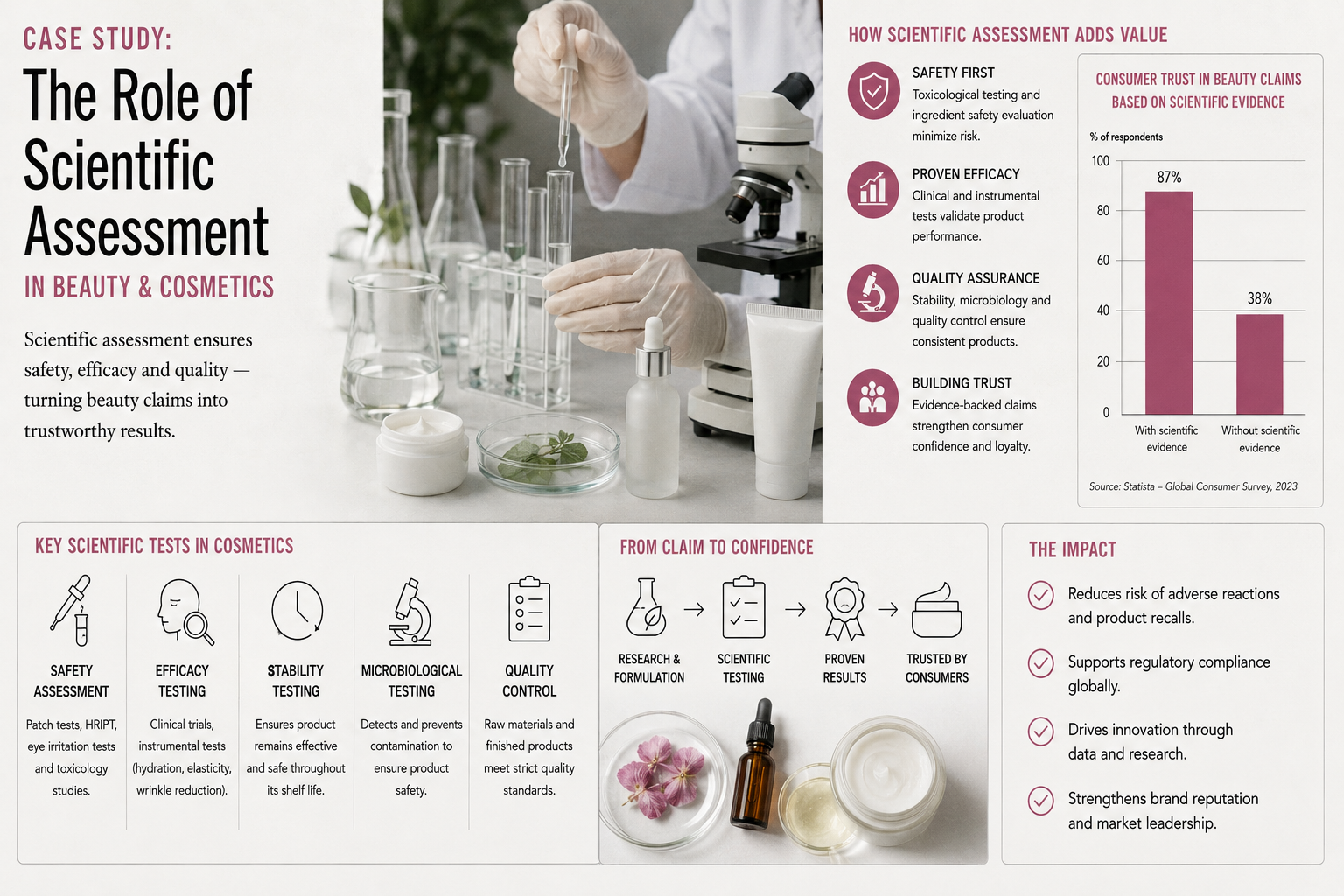
Does the ingredient irritate the skin? Does it cause allergic reactions? Does it disrupt hormones? Does it affect reproduction? Does it cause cancer? Does it harm the environment?
These questions shape regulatory decisions. They determine whether an ingredient is allowed, restricted, or banned. They influence how companies formulate products. They guide consumer expectations.
Scientific assessment is the engine behind safety standards.
The Global Patchwork of Cosmetic Regulation
Cosmetic regulation varies across regions. Each region has its own laws, its own banned substances, its own safety requirements, and its own enforcement systems. This creates a global patchwork that companies must navigate.
The United States relies on the Food and Drug Administration. The FDA focuses on safety but allows many ingredients that other regions restrict. The European Union has one of the strictest cosmetic regulatory systems. It bans hundreds of substances and requires rigorous safety assessments. Canada maintains a strong regulatory framework with its own list of prohibited and restricted ingredients. Japan and South Korea combine strict safety standards with cultural emphasis on skincare innovation. Australia follows a hybrid model with strong oversight and detailed ingredient rules.
This global variation creates complexity. Companies must reformulate products for different markets. They must comply with multiple regulatory systems. They must manage different consumer expectations.
Cosmetic regulation is global, but it is not uniform.
The Landscape of Banned Substances
Banned substances are the most visible part of cosmetic regulation. They represent ingredients that regulators have determined to be unsafe. These substances may cause toxicity, cancer, hormone disruption, or environmental harm.
Common categories of banned substances include:
Carcinogens. Ingredients linked to cancer risk. Endocrine disruptors. Chemicals that interfere with hormones. Toxic metals. Substances such as lead, mercury, and arsenic. Certain preservatives. Ingredients that may cause irritation or long term harm. Certain fragrances. Compounds that may trigger allergies or respiratory issues. Certain colorants. Pigments that may contain harmful contaminants.
Banned substances reflect scientific consensus. They reflect regulatory caution. They reflect public concern. They reflect the evolving understanding of ingredient safety.
The list of banned substances grows as science advances.
The Challenge of Restricted Ingredients
Restricted ingredients are not banned, but they must be used carefully. Regulators allow them under specific conditions. These conditions may include concentration limits, usage restrictions, or labeling requirements.
Restricted ingredients include:
Certain preservatives that prevent microbial growth but may irritate skin at high levels. Certain UV filters that protect against sun damage but may affect hormones. Certain fragrances that enhance scent but may trigger allergies. Certain colorants that add vibrancy but require purity controls.
Restricted ingredients require careful formulation. Companies must follow concentration limits. They must follow usage guidelines. They must follow labeling rules. They must ensure compliance across markets.
Restricted ingredients reflect the balance between safety and functionality.
The Pressure of Compliance Challenges
Compliance is one of the most difficult aspects of cosmetic regulation. Companies must navigate complex rules, evolving standards, and global variation. Compliance requires investment, expertise, and discipline.
Compliance challenges include:
Ingredient sourcing. Companies must ensure that suppliers provide safe and compliant materials. Formulation management. They must adjust formulas for different markets. Labeling accuracy. They must list ingredients correctly and follow regional rules. Testing requirements. They must conduct safety assessments and stability tests. Documentation. They must maintain detailed records for regulators. Monitoring changes. They must track regulatory updates and scientific developments. Responding to recalls. They must act quickly if a product is found to be unsafe.
Compliance is not optional. It is essential for consumer safety and brand integrity.
The Influence of Consumer Awareness
Consumer awareness has become a powerful force in cosmetic regulation. People want transparency. They want clarity. They want safety. They want to understand what they put on their skin. They want to avoid harmful ingredients. They want brands to act responsibly.
This awareness influences regulation. It influences industry behavior. It influences product development. It influences marketing. It influences cultural expectations.
Consumers are not passive. They shape the regulatory landscape.
The Rise of Clean Beauty
Clean beauty has become a cultural movement. It emphasizes safety, transparency, and simplicity. It avoids certain ingredients. It promotes natural alternatives. It challenges traditional formulations.
Clean beauty is not a regulatory category. It is a cultural category. Yet it influences regulation indirectly. It encourages companies to remove controversial ingredients. It encourages regulators to examine safety concerns. It encourages consumers to demand clarity.
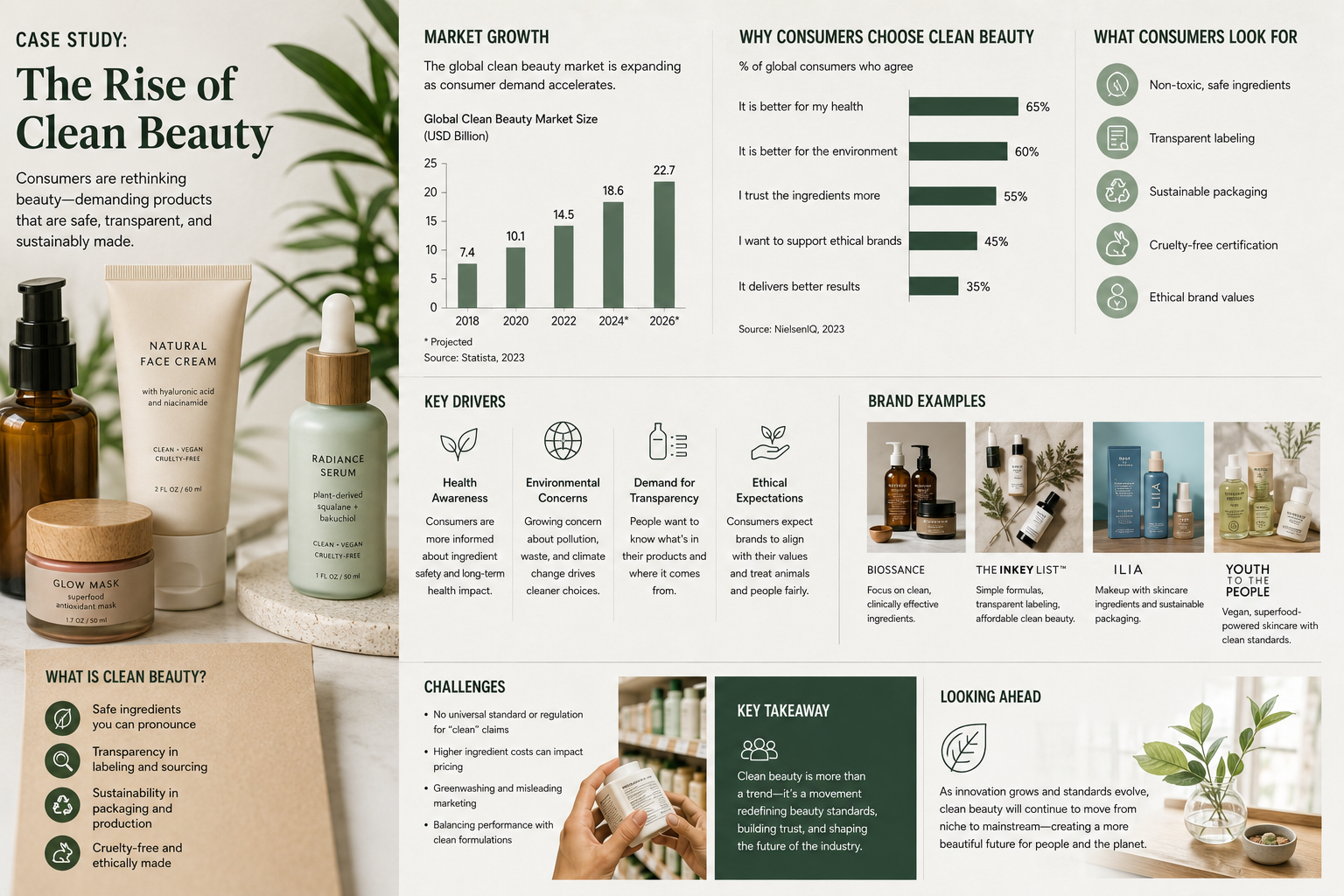
Clean beauty reflects the desire for safer and more transparent cosmetics.
The Future of Cosmetic Ingredient Regulation
The future will be shaped by several forces.
More scientific research. New studies will refine safety assessments. More global harmonization. Regions may align standards more closely. More transparency. Consumers will demand clearer ingredient information. More digital tools. Technology will improve compliance tracking. More sustainability. Environmental impact will influence ingredient rules. More scrutiny of endocrine disruptors. Hormone related concerns will shape regulation. More focus on long term exposure. Chronic use will become a key factor. More innovation. New ingredients will require new safety frameworks.
Cosmetic regulation will continue to evolve. It will become more scientific. It will become more transparent. It will become more global.
The future of cosmetic safety depends on vigilance.
A Closing Reflection
Cosmetic ingredient regulation is a quiet guardian of public health. It protects consumers from harm. It guides companies toward responsible formulation. It reflects scientific progress. It responds to cultural expectations. It balances innovation with safety.
Safety standards define what is acceptable. Banned substances define what is not. Compliance challenges define the difficulty of navigating this world. Together, they shape the beauty industry.
Cosmetics may appear simple, but their regulation is complex. It requires science, oversight, and responsibility. It requires collaboration between regulators, companies, and consumers. It requires constant adaptation.
Cosmetic regulation is not only about ingredients. It is about trust.
Categories