Algorithmic Curation and Bias
How Recommendation Engines Shape Discovery, Diversity, and Cultural Influence
There is a quiet force that shapes what people see, what they hear, what they learn, and what they believe. It does not speak loudly. It does not announce itself. It does not ask for permission. It works in the background, sorting, filtering, ranking, and presenting. This force is algorithmic curation. It is the invisible hand behind recommendation engines, the systems that decide which videos appear next, which songs are suggested, which articles surface, which creators rise, and which voices fade.
Algorithmic curation has become one of the most influential cultural powers of the digital age. It shapes discovery. It shapes diversity. It shapes influence. It shapes identity. It shapes the rhythm of global culture. Yet its impact is not neutral. It carries bias, intention, and consequence. It reflects the values of the systems that create it and the data that feeds it.
To understand algorithmic curation and bias, one must understand how recommendation engines work, how they influence behaviour, and how they shape the cultural landscape.
The Quiet Power of Recommendation Engines
Recommendation engines operate silently. They observe behaviour. They analyse patterns. They predict preferences. They decide what content is most likely to keep a person engaged. They do this millions of times per second across platforms that host billions of users.
These engines are built on data. Every click, scroll, pause, like, share, and search becomes part of a behavioural profile. This profile becomes the foundation for recommendations. The engine learns what a person enjoys, what they ignore, what they revisit, and what they abandon. It learns their habits, their rhythms, their curiosities, and their impulses.
This learning process creates a personalised digital environment. It shapes what a person sees. It shapes what they discover. It shapes what they believe is available.
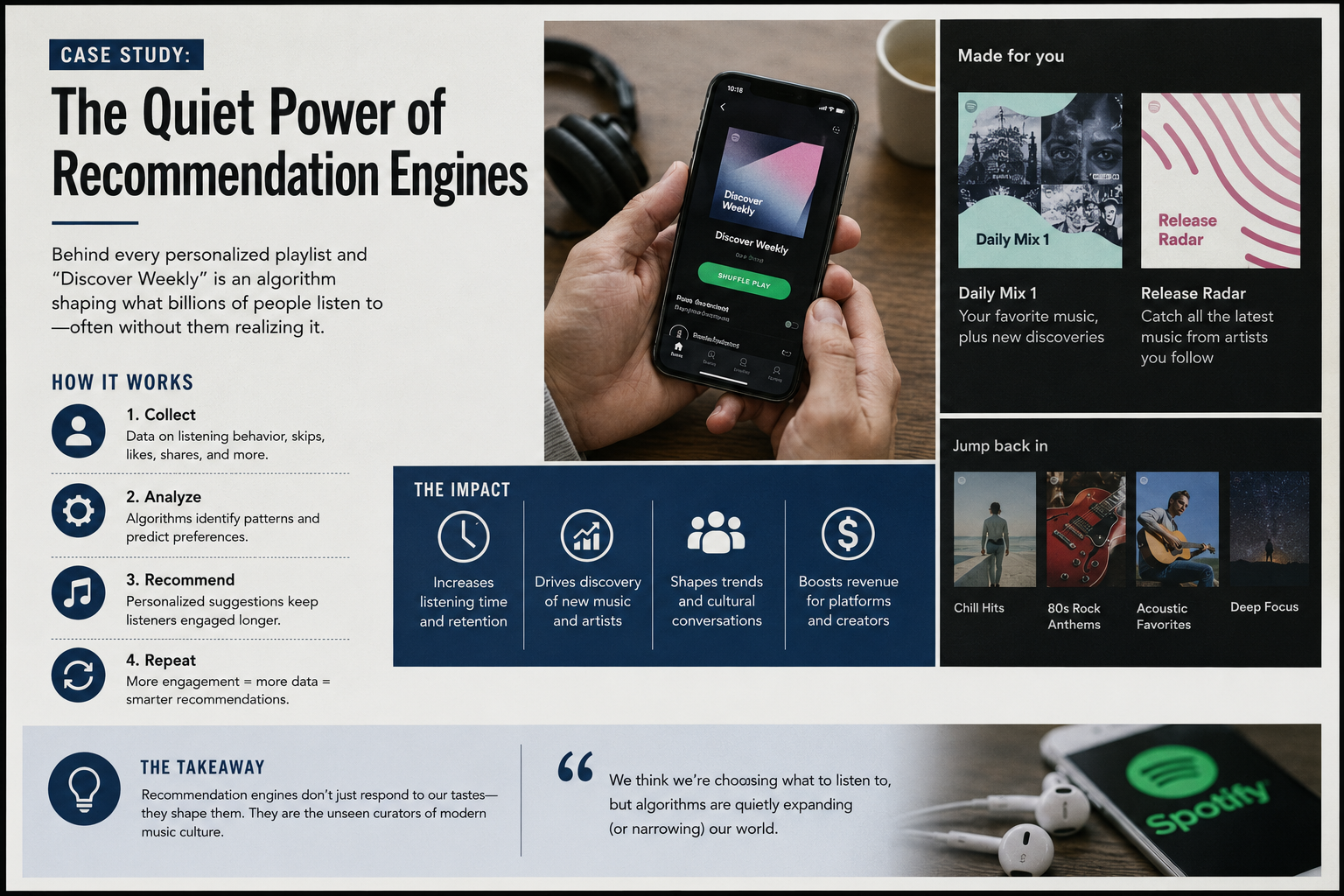
Recommendation engines do not simply show content. They shape perception.
The Illusion of Choice
People often believe they choose what they consume online. They believe they discover content organically. They believe they explore freely. Yet much of what they encounter is curated by algorithms. The engine decides what appears first. It decides what appears next. It decides what appears repeatedly. It decides what appears rarely.
This creates an illusion of choice. People feel they are exploring, but they are being guided. They feel they are discovering, but they are being directed. They feel they are choosing, but they are being influenced.
The illusion of choice is one of the most powerful aspects of algorithmic curation. It shapes behaviour without revealing its presence.
The Architecture of Bias
Bias in recommendation engines does not always come from intention. It often comes from data. Algorithms learn from patterns. If the data reflects bias, the algorithm amplifies it. If the data reflects inequality, the algorithm reinforces it. If the data reflects cultural dominance, the algorithm magnifies it.
Bias can appear in many forms.
It can appear as popularity bias, where already popular content receives more visibility. It can appear as engagement bias, where content that triggers strong reactions is prioritised. It can appear as demographic bias, where certain groups receive more exposure than others. It can appear as cultural bias, where dominant cultures overshadow minority cultures. It can appear as behavioural bias, where past actions limit future discovery.
Bias is not always intentional, but it is always influential.
The Narrowing of Discovery
Recommendation engines are designed to maximise engagement. They show content that aligns with existing preferences. They reinforce patterns. They deepen habits. They create loops.
This creates a narrowing of discovery. People see more of what they already enjoy. They see less of what lies outside their comfort zone. They see content that feels familiar rather than content that feels challenging. They see voices that resemble their own rather than voices that expand their perspective.
Discovery becomes predictable. Exploration becomes limited. Diversity becomes constrained.
The narrowing of discovery is one of the most significant cultural consequences of algorithmic curation.
The Echo Chamber Effect
Echo chambers form when people are repeatedly exposed to content that aligns with their beliefs. Recommendation engines amplify this effect. They show content that confirms existing views. They show content that reinforces emotional responses. They show content that deepens identity.
Echo chambers can shape political beliefs. They can shape social attitudes. They can shape cultural preferences. They can shape personal identity. They can create environments where alternative perspectives feel distant or invisible.
Echo chambers are not created by individuals alone. They are created by algorithms that prioritise engagement over diversity.
The Influence on Cultural Diversity
Cultural diversity depends on exposure. It depends on access to different voices, different stories, different traditions, and different perspectives. Recommendation engines influence this exposure.
When algorithms prioritise popular content, minority voices struggle to surface. When algorithms prioritise engagement, nuanced content becomes overshadowed by sensational content. When algorithms prioritise familiarity, cultural diversity becomes secondary.
This influence shapes global culture. It shapes which artists rise. It shapes which creators gain visibility. It shapes which languages dominate. It shapes which stories spread.
Algorithmic curation can support diversity, but it can also suppress it.
The Rise of Algorithmic Influence
Algorithmic influence is not limited to entertainment. It shapes news consumption. It shapes shopping behaviour. It shapes travel decisions. It shapes social interactions. It shapes professional opportunities. It shapes cultural trends.
Platforms rely on recommendation engines to keep users engaged. Brands rely on them to reach audiences. Creators rely on them to gain visibility. Communities rely on them to grow. This reliance gives algorithms immense cultural power.
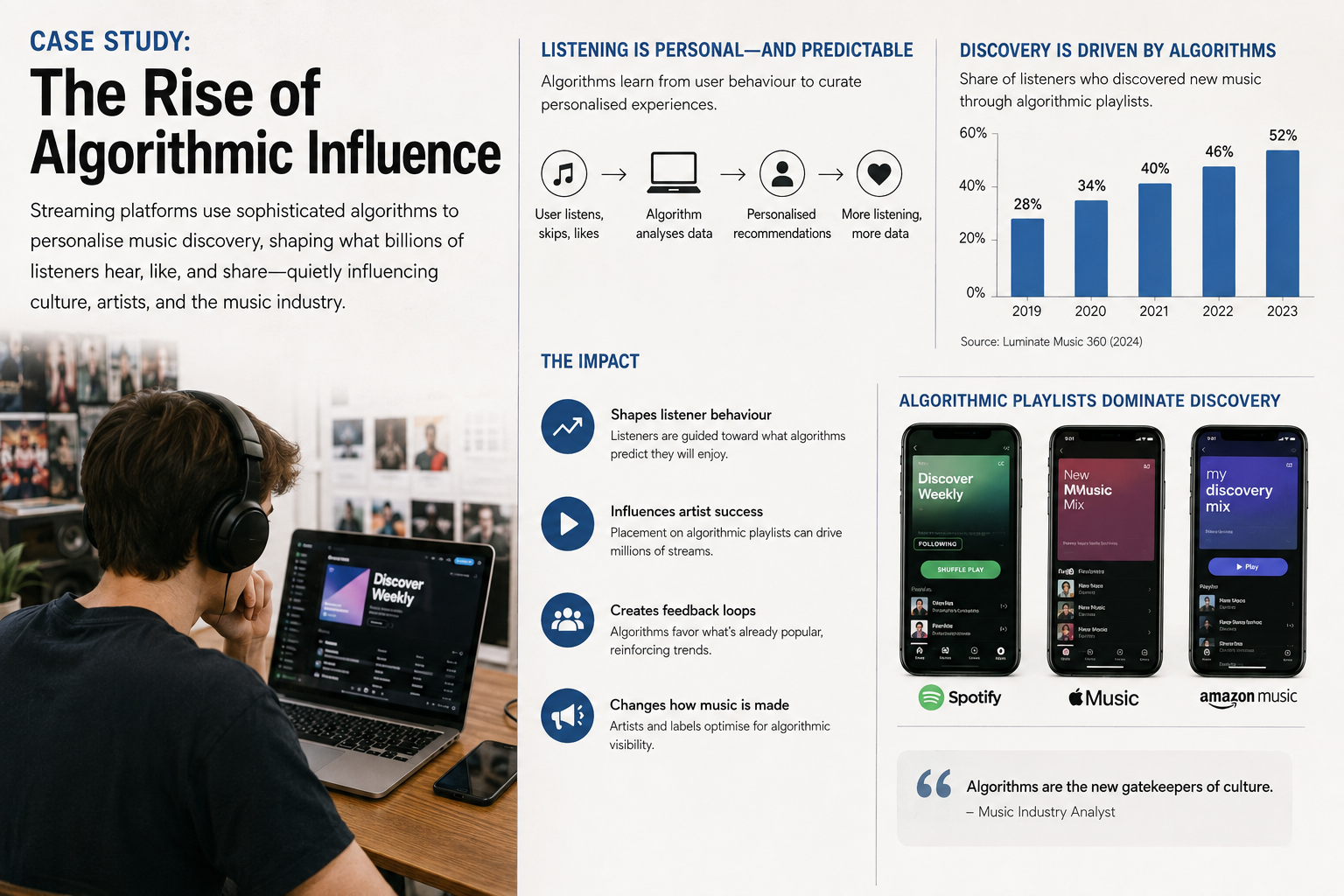
Algorithmic influence is now one of the most significant forces in global culture.
The Challenge of Transparency
One of the most persistent issues in algorithmic curation is transparency. Users do not know how recommendations are generated. They do not know why certain content appears. They do not know how their behaviour influences the algorithm. They do not know how bias shapes their feed.
This lack of transparency creates confusion. It creates mistrust. It creates vulnerability. It creates environments where people cannot fully understand the forces shaping their digital experience.
Transparency is essential for accountability. Without it, algorithms remain invisible and unchallenged.
The Future of Recommendation Engines
The future of algorithmic curation will be shaped by several forces.
More demand for transparency. More emphasis on ethical design. More focus on diversity in recommendations. More regulation of algorithmic influence. More user control over curation. More integration of human oversight. More awareness of bias. More collaboration between technologists and cultural experts.
Recommendation engines will continue to evolve. They will become more sophisticated. They will become more personalized. They will become more influential. Yet they must also become more responsible.
The future of algorithmic curation will depend on how well systems balance engagement with diversity.
A Closing Reflection
Algorithmic curation and bias reveal something profound about the digital age. They reveal how invisible systems shape human experience. They reveal how technology influences culture. They reveal how discovery is guided. They reveal how diversity is negotiated. They reveal how influence is distributed.
Recommendation engines are not neutral. They carry intention, bias, and consequence. They shape what people see, what they learn, and what they believe. They shape the cultural landscape in ways that are both subtle and powerful.
The challenge now is to ensure that algorithmic curation supports discovery rather than limits it. That it supports diversity rather than suppresses it. That it supports culture rather than distorts it.
Algorithms shape the digital world. Humanity must shape the values behind them.
Categories