Affordability Debates in Private Hospitals
There is a moment that reveals the true weight of healthcare. It is not found in medical charts, surgical theatres, or diagnostic machines. It is found in the quiet pause that comes after a patient asks a simple question. How much will this cost. That pause carries fear, uncertainty, and frustration. It carries the reality that private healthcare, while advanced and efficient, is often financially out of reach for many people. The affordability debate surrounding private hospitals is not a technical discussion. It is a human one. It is a reflection of how societies value health, how they distribute care, and how they negotiate the tension between profit and wellbeing.
Private hospitals occupy a unique space in global healthcare. They offer speed, comfort, and specialised expertise. They promise shorter waiting times, personalised attention, and advanced technology. Yet these advantages come with a price that continues to rise. The affordability debate is growing louder because the gap between access and cost is widening. It is a debate shaped by economics, ethics, policy, and human experience.
The Promise of Private Healthcare
Private hospitals emerged as an alternative to public systems. They offered something different. They offered efficiency. They offered comfort. They offered choice. They offered a sense of control in moments when life feels uncertain. For many people, private hospitals represent hope. They represent the possibility of receiving care without delay. They represent the reassurance of modern facilities and attentive staff.
This promise is powerful. It attracts patients who want certainty. It attracts families who want the best for their loved ones. It attracts individuals who fear long queues and bureaucratic processes. Private hospitals thrive because they offer a version of healthcare that feels immediate and personal.
Yet this promise is not accessible to everyone. It is shaped by affordability.
The Rising Cost of Private Care
The cost of private healthcare has risen steadily across the world. This rise is influenced by several factors. Technology becomes more advanced. Equipment becomes more expensive. Specialist training requires investment. Staff salaries increase. Operational costs grow. Insurance structures evolve. Market competition intensifies.
These costs flow through the system and reach the patient. A consultation becomes more expensive. A diagnostic test becomes more expensive. A surgical procedure becomes more expensive. Even basic care becomes more expensive. The affordability debate grows because private hospitals operate within an economic model that prioritises sustainability and profit.
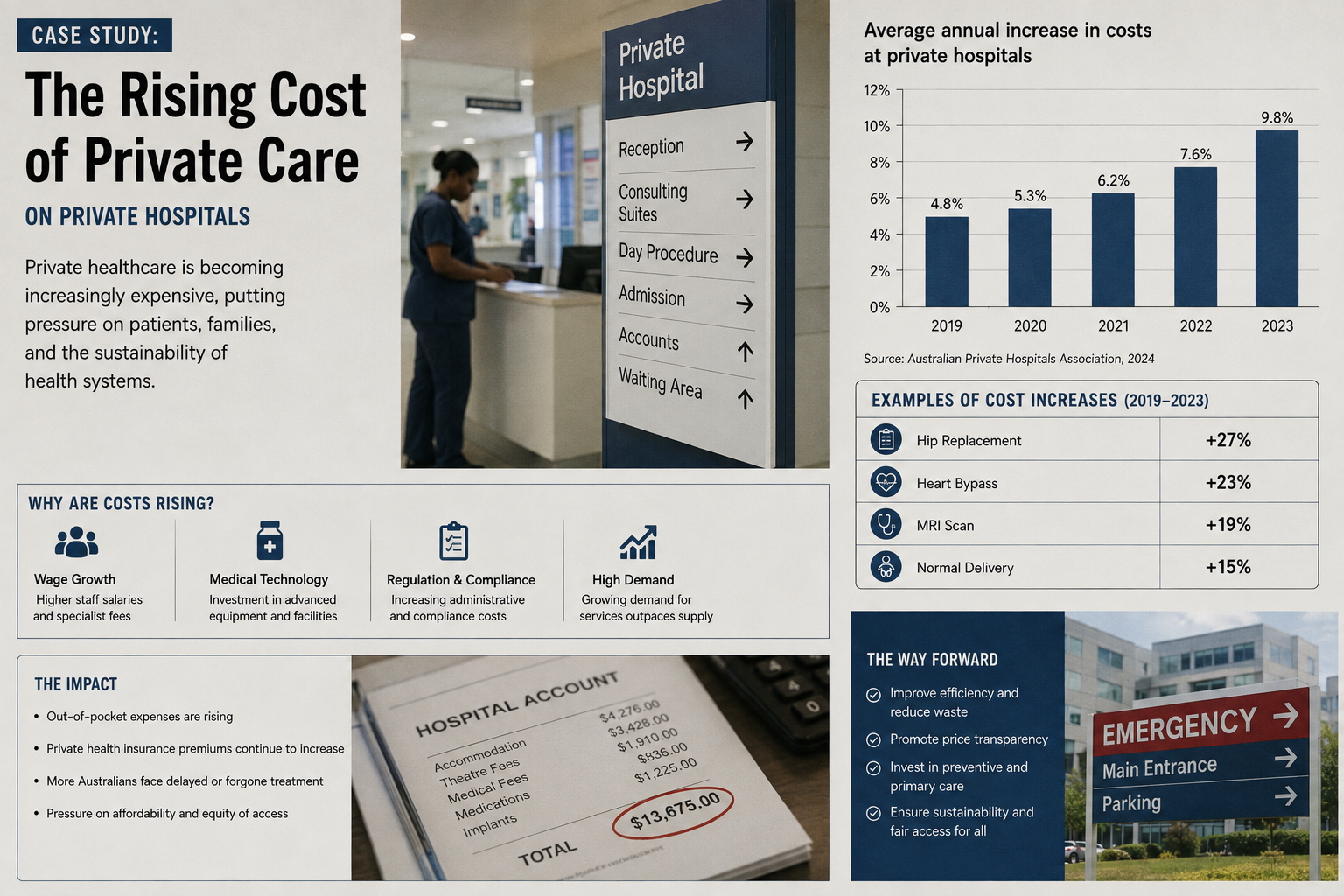
Healthcare becomes a commodity. Patients become consumers. Treatment becomes a transaction.
The Emotional Weight of Medical Bills
Medical bills carry emotional weight. They create anxiety. They create fear. They create hesitation. They create guilt. People worry about whether they can afford treatment. They worry about whether they should delay care. They worry about whether they should choose cheaper options. They worry about whether they will fall into debt.
This emotional weight affects decision making. Some patients avoid private hospitals entirely. Others choose minimal treatment. Others rely on loans. Others negotiate payment plans. Others sacrifice other needs to afford care.
Affordability debates are not only financial. They are emotional.
The Inequality Within Private Healthcare
Private hospitals reveal inequality. They show the divide between those who can afford care and those who cannot. They show how income shapes access. They show how wealth shapes treatment options. They show how financial privilege influences health outcomes.
In many regions, private hospitals serve a small portion of the population. They serve those with insurance. They serve those with savings. They serve those with stable income. Meanwhile, others rely on public systems that may be underfunded, overcrowded, or slow.
This inequality raises ethical questions. Should healthcare be determined by wealth. Should access depend on financial status. Should life saving treatment be a luxury.
The affordability debate is a debate about fairness.
The Role of Insurance
Insurance plays a central role in private healthcare affordability. It determines what patients can access. It determines what hospitals can charge. It determines how costs are distributed. Yet insurance systems vary widely across regions.
In some countries, insurance covers most private care. In others, insurance covers only a portion. In others, insurance is expensive and inaccessible. In others, insurance companies negotiate aggressively with hospitals, influencing pricing structures.
Insurance can make private care affordable. It can also make it complicated. Policies may include exclusions, limits, and conditions. Patients may face unexpected bills. They may face disputes. They may face confusion.
Insurance is both a bridge and a barrier.
The Debate Over Transparency
One of the most persistent issues in private healthcare is transparency. Patients often do not know the cost of treatment until after it is completed. They do not know the cost of tests, consultations, or procedures. They do not know what insurance covers. They do not know what additional fees may appear.
This lack of transparency creates mistrust. It creates frustration. It creates conflict. It creates fear. Patients want clarity. They want honesty. They want predictable pricing. They want to make informed decisions.
Transparency is essential for affordability. Without it, patients feel powerless.
The Pressure on Private Hospitals
Private hospitals face their own pressures. They must maintain high standards. They must invest in technology. They must hire skilled staff. They must comply with regulations. They must manage competition. They must remain profitable.
These pressures influence pricing. They influence service models. They influence patient experience. Private hospitals must balance quality with affordability. They must balance sustainability with accessibility. They must balance business goals with ethical responsibility.
The affordability debate is not only about patients. It is also about the challenges faced by private hospitals.
The Global Variation in Private Healthcare Costs
Private healthcare costs vary across regions. They reflect economic conditions, regulatory frameworks, cultural expectations, and market dynamics.
In North America, private healthcare is expensive due to insurance structures and advanced technology. In Europe, private healthcare is influenced by strong public systems and regulatory oversight. In Asia, private healthcare varies widely, with some regions offering affordable care and others offering premium services. In Africa, private healthcare often fills gaps left by public systems, but affordability remains a major challenge. In Latin America, private healthcare is shaped by economic instability and insurance limitations.
These variations show that affordability debates are global but not uniform.
The Future of Private Healthcare Affordability
The future of private healthcare affordability will be shaped by several forces.
More demand for transparent pricing. More pressure for ethical billing practices. More integration of digital health solutions. More competition from public and hybrid systems. More government intervention in pricing. More innovation in insurance models. More focus on preventive care. More emphasis on patient centred policies.
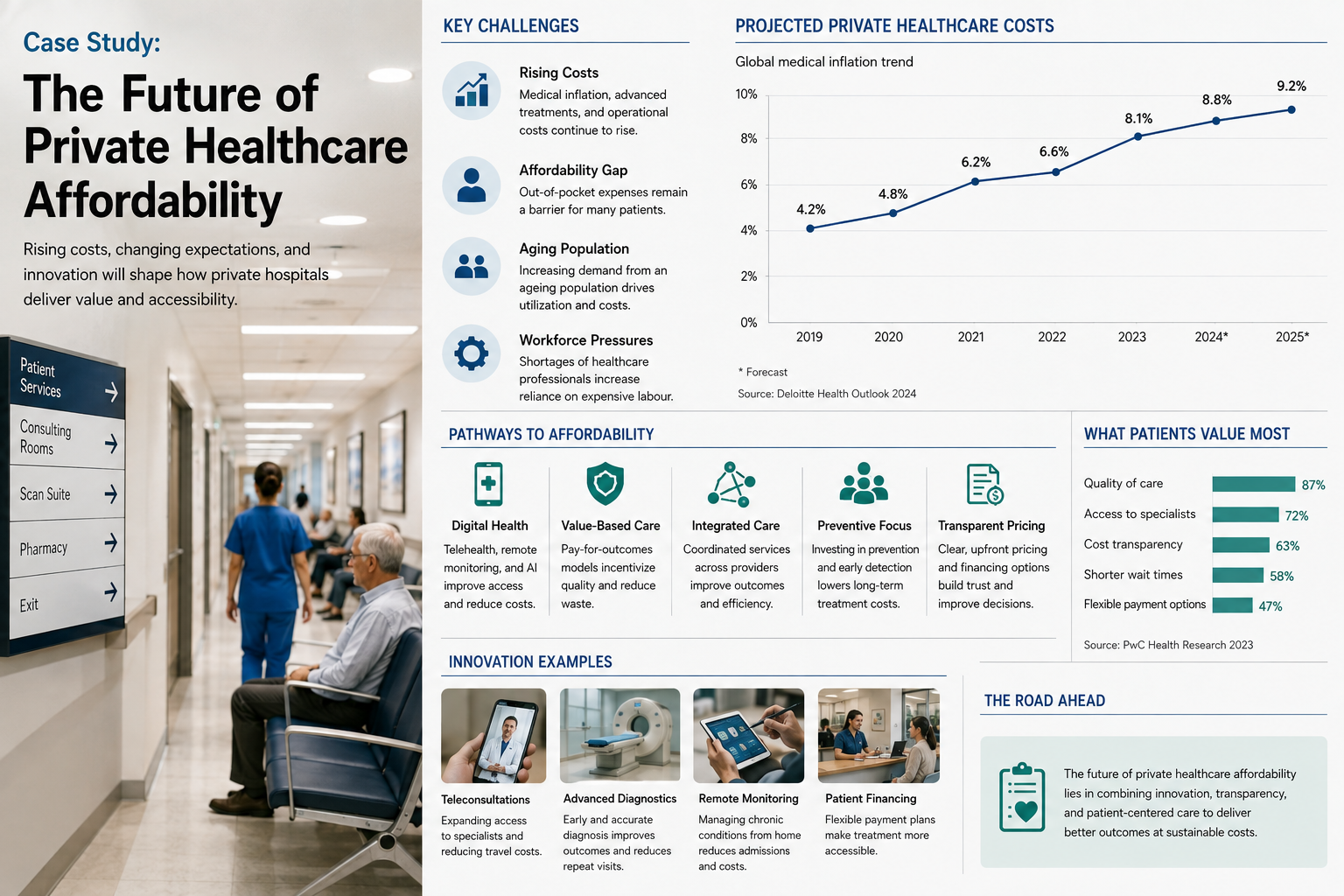
Private hospitals will need to adapt. They will need to rethink pricing. They will need to embrace transparency. They will need to balance profit with responsibility. They will need to listen to patients.
Affordability will become a defining factor in the future of private healthcare.
A Closing Reflection
Affordability debates in private hospitals reveal something profound about society. They reveal how people value health. They reveal how systems distribute care. They reveal how economics shape wellbeing. They reveal how fear and hope coexist in the healthcare experience.
Private hospitals offer comfort, speed, and expertise. They offer reassurance in moments of vulnerability. Yet their cost creates barriers that cannot be ignored. The affordability debate is not a criticism of private care. It is a call for balance. It is a call for fairness. It is a call for transparency. It is a call for humanity.
Healthcare is not only a service. It is a lifeline. It must be accessible. It must be fair. It must be compassionate.
The future of private hospitals will depend on how well they respond to this truth.
Categories