Banking as a Service
White Label Banking, Platform Partnerships, and Regulatory Risks
There is a part of modern finance that most people never see. It does not appear on debit cards, bank statements, or mobile apps. It lives underneath the surface, powering transactions, verifying identities, holding deposits, and enabling financial products that appear to come from companies that are not banks. This hidden infrastructure is Banking as a Service, often shortened to BaaS. It is the engine behind white label banking, platform partnerships, and a new wave of digital financial innovation.
BaaS has become one of the most transformative forces in financial technology. It allows nonbank companies to offer banking services without becoming banks themselves. It allows platforms to embed financial tools directly into their ecosystems. It allows startups to launch financial products quickly. It allows consumers to access banking through brands they already trust.
Yet BaaS also carries regulatory risks, operational complexity, and questions about fairness and oversight. It is a system filled with opportunity and tension. To understand BaaS, one must understand how it works, why it matters, and what challenges it faces.
The Meaning of Banking as a Service
Banking as a Service is a model where licensed banks provide their infrastructure to nonbank companies. These companies use the bank’s regulatory permissions, compliance systems, and financial rails to offer services such as accounts, payments, cards, lending, and identity verification.
The consumer sees a brand. The brand sees a platform. The platform sees a bank. The bank sees a regulated obligation.
BaaS creates a layered ecosystem. Each layer carries responsibility. Each layer carries risk. Each layer carries influence.
The power of BaaS lies in its ability to make banking invisible.
The Rise of White Label Banking
White label banking is one of the most visible expressions of BaaS. It allows companies to offer banking products under their own brand while relying on a partner bank for the underlying infrastructure.
A retail company can offer a branded debit card. A ride hailing platform can offer driver accounts. A marketplace can offer seller financing. A fintech startup can offer digital checking accounts. A gaming platform can offer stored value wallets.
The consumer interacts with the brand, not the bank. The brand controls the experience. The bank controls the compliance. The platform controls the technology.
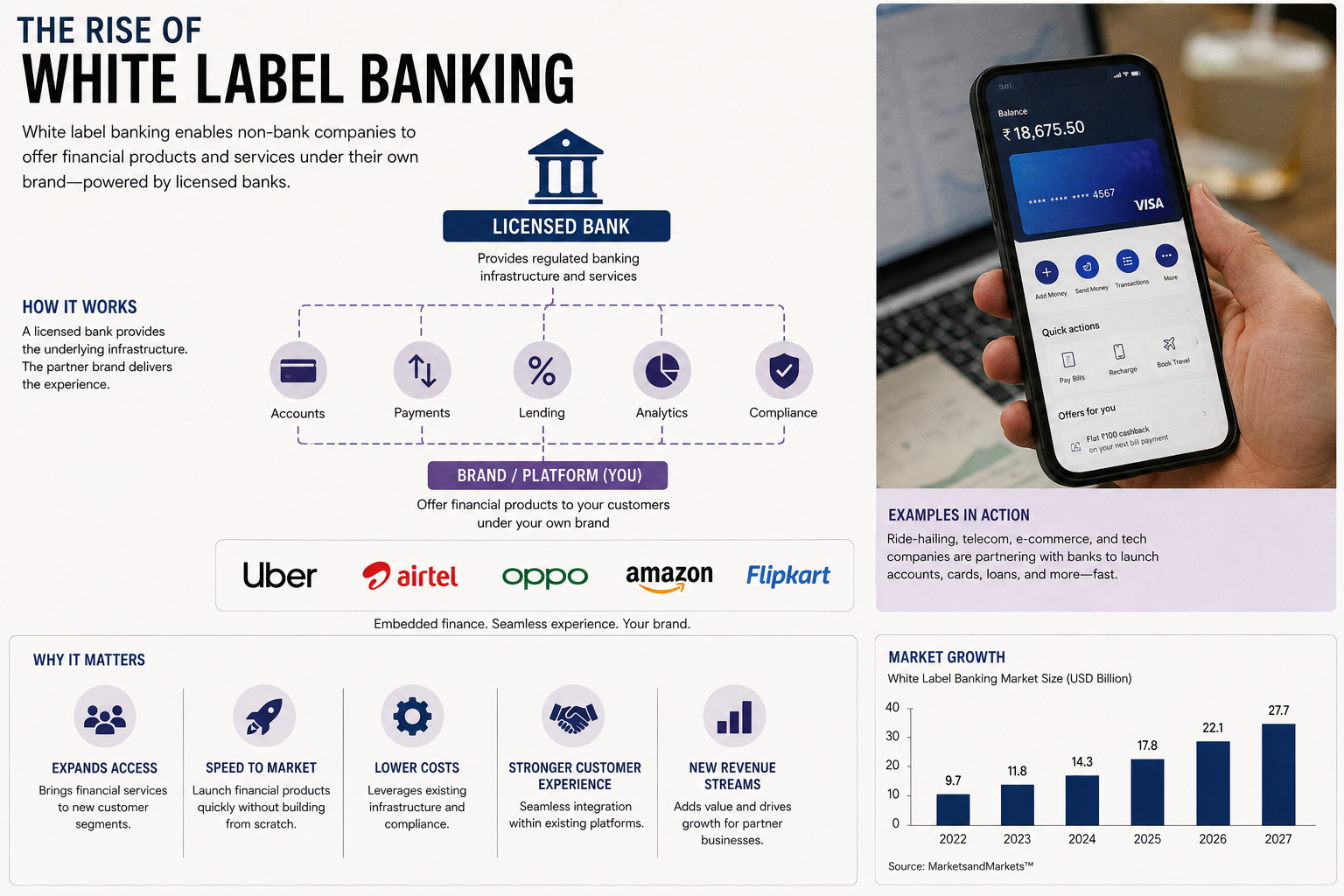
White label banking expands financial access, but it also blurs the line between banks and nonbanks.
The Power of Platform Partnerships
Platform partnerships are the backbone of BaaS. They connect banks with technology providers, and technology providers with consumer facing brands. These partnerships allow financial services to be embedded directly into digital ecosystems.
A platform can integrate payments into its checkout flow. A platform can integrate lending into its seller dashboard. A platform can integrate savings tools into its mobile app. A platform can integrate identity verification into its onboarding.
These integrations create seamless experiences. They reduce friction. They increase engagement. They allow financial services to feel natural rather than separate.
Platform partnerships turn banking into a feature rather than a destination.
The Acceleration of Fintech Innovation
BaaS accelerates fintech innovation by reducing barriers to entry. Startups no longer need to obtain banking licenses. They no longer need to build compliance systems from scratch. They no longer need to negotiate directly with regulators. They can focus on user experience, product design, and market strategy.
This acceleration has created a wave of new financial products. Digital wallets. Micro savings tools. Instant payouts. Subscription based financial services. Embedded credit. Automated budgeting. Creator economy banking.
BaaS allows innovation to move faster than traditional banking ever could.
The Complexity Behind the Scenes
The simplicity of BaaS on the surface hides complexity underneath. Banks must manage compliance for products they do not fully control. Platforms must manage technology for services they do not fully regulate. Brands must manage customer relationships for accounts they do not fully own.
This complexity creates tension. It creates operational risk. It creates regulatory scrutiny. It creates questions about accountability.
When something goes wrong, who is responsible? When a customer is harmed, who must respond? When a rule is broken, who must answer to regulators? When a system fails, who must fix it?
BaaS requires clarity in a world where roles are often blurred.
The Regulatory Risks of BaaS
Regulatory risk is one of the most significant challenges in BaaS. Banks operate under strict oversight. They must follow rules related to consumer protection, anti money laundering, fraud prevention, data security, and financial stability. When banks partner with nonbank companies, they remain responsible for compliance even if they do not control the customer experience.
This creates several risks.
Risk of insufficient oversight. Banks may struggle to monitor partners effectively. Risk of compliance gaps. Nonbank partners may not understand regulatory obligations. Risk of rapid scaling. Platforms may grow faster than compliance systems can support. Risk of misaligned incentives. Brands may prioritize growth over regulatory discipline. Risk of regulatory intervention. Authorities may impose penalties or restrictions.
Regulators are increasingly concerned about BaaS because it expands banking beyond traditional boundaries.
The Debate Over Accountability
Accountability is one of the most important debates in BaaS. When a consumer interacts with a financial product, they often believe the brand is responsible. Yet legally, the bank is responsible. The platform is responsible. The brand is responsible. Responsibility is shared, but shared responsibility can become unclear responsibility.
This debate affects trust. It affects transparency. It affects consumer protection. It affects regulatory enforcement.
BaaS requires accountability frameworks that are clear, enforceable, and fair.
The Importance of Compliance Culture
Compliance culture is essential for BaaS success. Banks must ensure that partners follow rules. Platforms must ensure that products meet regulatory standards. Brands must ensure that customer interactions are safe and transparent.
Compliance culture is not only about rules. It is about mindset. It is about discipline. It is about responsibility. It is about understanding that financial products carry risk.
BaaS cannot succeed without a strong compliance culture across all layers.
The Future of BaaS
The future of Banking as a Service will be shaped by several forces.
More regulatory scrutiny. Authorities will demand stronger oversight. More structured partnerships. Banks will tighten partner requirements. More transparency. Consumers will expect clarity about who provides their financial services. More innovation. Platforms will embed more advanced financial tools. More consolidation. Smaller BaaS providers may merge or exit. More focus on risk management. Compliance will become a competitive advantage. More global expansion. BaaS will grow in emerging markets. More emphasis on responsible design. Ethical considerations will shape product development.
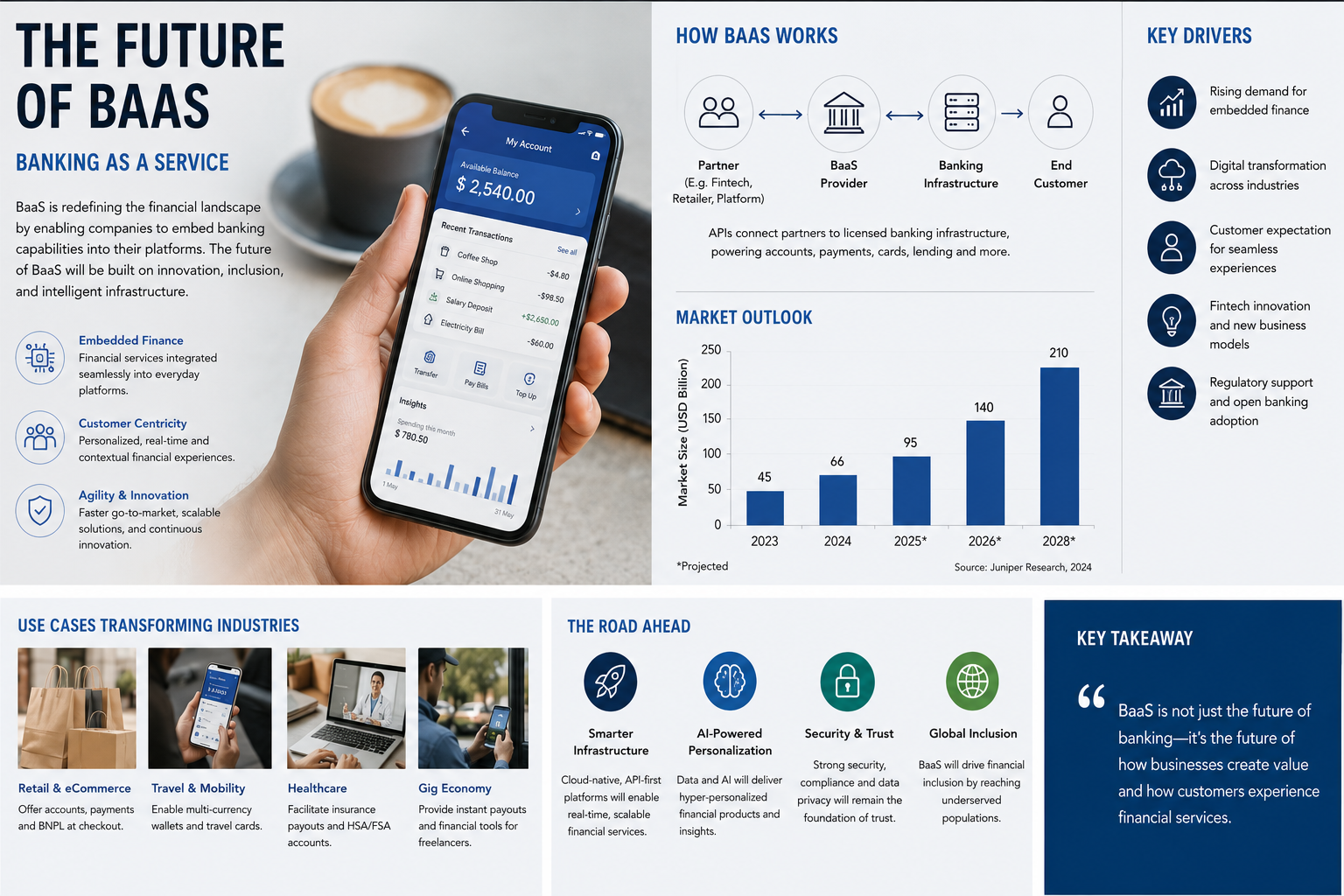
BaaS will continue to evolve. It will become more mature. It will become more regulated. It will become more integrated into digital ecosystems.
The future of BaaS will depend on how well systems balance innovation with responsibility.
A Closing Reflection
Banking as a Service is reshaping modern finance. It allows companies to offer financial products without becoming banks. It allows platforms to embed financial tools directly into their ecosystems. It allows consumers to access banking through brands they trust. It expands access. It accelerates innovation. It transforms the financial landscape.
Yet BaaS also carries risk. It carries complexity. It carries regulatory tension. It carries questions about fairness, oversight, and accountability. It requires discipline. It requires transparency. It requires responsibility.
BaaS is not only a technology model. It is a cultural shift in how people experience banking. It is a reminder that financial services can be both powerful and fragile. It is a reminder that innovation must be balanced with protection.
The future of BaaS will depend on how well the industry navigates this balance.
Categories