Digital Marketing in Social Media
There is a moment each morning when millions of people around the world reach for their phones before they reach for anything else. They scroll through feeds, glance at stories, watch short videos, and absorb a stream of content that feels endless. This ritual has become one of the most powerful forces in modern culture. It shapes opinions, influences behaviour, and directs attention. It is the heartbeat of digital marketing in social media.
Digital marketing in social media is not simply a strategy. It is a living ecosystem. It is a space where creativity, psychology, technology, and commerce collide. It is a place where brands try to speak, audiences try to listen, and algorithms decide who hears what. It is a world that changes quickly, often without warning, and demands constant reinvention.
To understand digital marketing in social media, one must understand the people who use it, the platforms that host it, and the cultural forces that shape it.
The Human Side of Digital Attention
Social media is built on human attention. Every like, comment, share, and view represents a moment when someone chooses to engage. Digital marketing depends on these moments. It depends on the ability to capture attention in a space where attention is scarce.
People do not scroll with patience. They scroll with instinct. They respond to emotion, curiosity, humour, beauty, and surprise. They ignore anything that feels dull, predictable, or forced. Digital marketing must understand this psychology. It must speak to emotion before information. It must connect before it persuades.
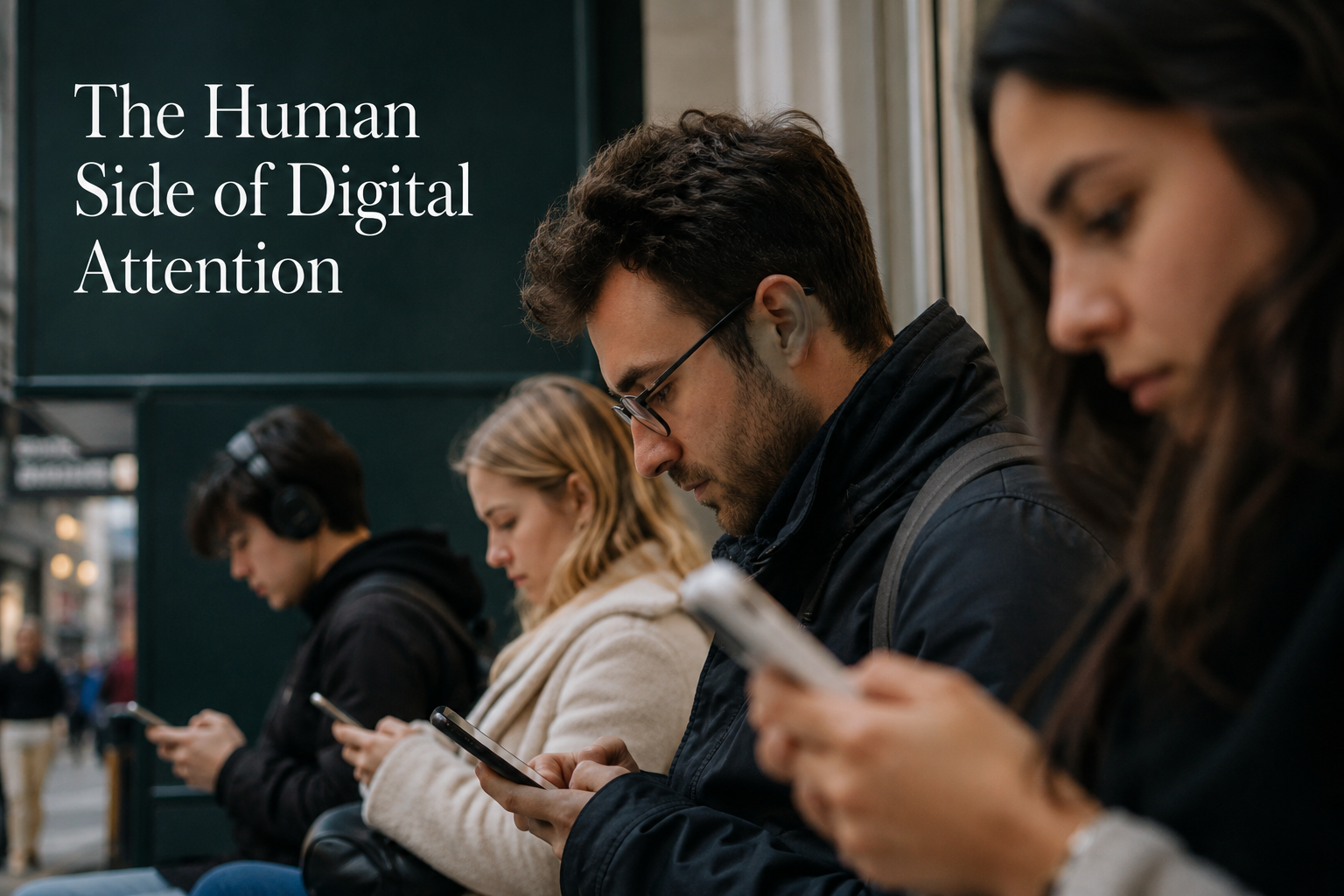
This human side of digital attention is the foundation of social media marketing. Without it, strategy becomes noise.
The Evolution of Content
Content is the currency of social media. It is the medium through which brands communicate. It is the bridge between intention and impact. Over time, content has evolved dramatically.
There was a time when text posts dominated. Then images took over. Then videos became essential. Now short form video shapes the rhythm of digital culture. People consume content in seconds. They expect clarity, energy, and authenticity. They expect content that feels alive.
Digital marketing must adapt to this evolution. It must create content that feels natural in the environment where it lives. It must understand the language of each platform. It must embrace the speed of digital culture without losing meaning.
Content is no longer a message. It is an experience.
The Role of Storytelling
Storytelling is one of the oldest human traditions. It is how people share knowledge, emotion, and identity. In social media, storytelling has become a powerful marketing tool. Brands use stories to create connection. They use stories to build trust. They use stories to make their presence feel human.
A story can be told through a single image, a short video, a caption, or a sequence of posts. It can be humorous, emotional, inspirational, or informative. What matters is not the format but the feeling. A story must make people care. It must make people pause. It must make people remember.
Digital marketing thrives when storytelling feels genuine rather than strategic.
The Influence of Algorithms
Algorithms are the invisible architects of social media. They decide what people see, when they see it, and how often they see it. They reward engagement. They reward consistency. They reward relevance. They reward content that keeps people on the platform.
Digital marketing must understand algorithms without becoming controlled by them. It must create content that resonates with humans first and algorithms second. It must balance creativity with strategy. It must adapt to changes without losing identity.
Algorithms shape the environment, but they do not define the message.
The Power of Communities
Communities are the soul of social media. They form around interests, identities, passions, and shared experiences. They create spaces where people feel seen and understood. They create environments where brands can build loyalty.
Digital marketing in social media is most effective when it focuses on community rather than audience. Communities engage. Communities respond. Communities advocate. Communities amplify.
Brands that build communities do not simply promote. They participate. They listen. They contribute. They become part of something larger than themselves.
Community is the future of digital marketing.
The Rise of Influencers
Influencers have become central to social media marketing. They are not simply content creators. They are cultural translators. They understand the language of digital platforms. They understand the psychology of their followers. They understand how to make content feel personal.
Influencers bring authenticity to marketing. They bring relatability. They bring trust. Their recommendations feel human rather than corporate. Their presence feels familiar rather than distant.
Digital marketing must approach influencers with respect. It must collaborate rather than dictate. It must choose influencers whose values align with the brand. It must create partnerships that feel natural.

Influencers are not advertisements. They are storytellers.
The Challenge of Authenticity
Authenticity is one of the most important elements of digital marketing. People can sense when content feels forced. They can sense when a brand tries too hard. They can sense when a message lacks sincerity.
Authenticity requires honesty. It requires vulnerability. It requires clarity. It requires a willingness to speak with a human voice rather than a corporate tone.
Brands that embrace authenticity build trust. Brands that ignore authenticity lose relevance.
Authenticity is not a trend. It is a necessity.
The Pressure of Constant Change
Social media changes quickly. Platforms evolve. Features appear and disappear. Trends rise and fall. Audiences shift. Algorithms update. Digital marketing must navigate this constant change.
This pressure can feel overwhelming. It requires flexibility. It requires experimentation. It requires curiosity. It requires a willingness to learn continuously.
Digital marketing is not a static discipline. It is a living practice.
The Future of Digital Marketing in Social Media
The future will be shaped by several forces.
More personalised content. More interactive experiences. More integration with artificial intelligence. More emphasis on community. More focus on authenticity. More collaboration with creators. More immersive formats. More ethical considerations.
Social media will continue to evolve. Digital marketing will evolve with it. The future will require creativity, empathy, and adaptability. It will require brands to listen more than they speak. It will require content that feels meaningful rather than mechanical.
The future of digital marketing in social media will be defined by humanity.
A Closing Reflection
Digital marketing in social media is not simply a strategy. It is a cultural practice. It is a reflection of how people communicate, connect, and express themselves. It is shaped by emotion, identity, and community. It is influenced by technology but driven by humanity.
Brands that succeed in social media do not chase trends. They understand people. They respect attention. They create meaning. They build relationships. They contribute to culture.
Social media is a global conversation. Digital marketing is the art of speaking in that conversation with clarity, creativity, and sincerity.
And that art continues to evolve.
Categories